
Getting the timing right is one of the most overlooked parts of any deck staining project. You can buy the best stain on the market, prep the wood perfectly, and still end up with a peeling, blotchy mess – all because the weather wasn’t on your side. Understanding how weather affects deck staining is the difference between a finish that lasts years and one that fails within months. This guide walks you through exactly what conditions to look for, what to avoid, and how to plan your project around the forecast.
Why Weather Conditions Matter More Than You Think
Wood is a porous, living material. It expands, contracts, absorbs moisture, and reacts to temperature fluctuations in ways that directly affect how stain penetrates and bonds to the surface.
When you apply stain in the wrong conditions, a few things can go wrong:
- The stain can dry too fast, leaving lap marks and an uneven finish.
- It can dry too slowly, collecting dust, insects, and debris as it sits wet.
- Moisture trapped beneath the stain film can cause peeling, bubbling, or mildew.
- Extreme cold can prevent the stain from curing properly, leading to a sticky or tacky surface that never fully hardens.
The wood doesn’t care what’s on your schedule. It will only accept stain on its own terms – and those terms are set by the weather.
The Ideal Temperature Range for Deck Staining
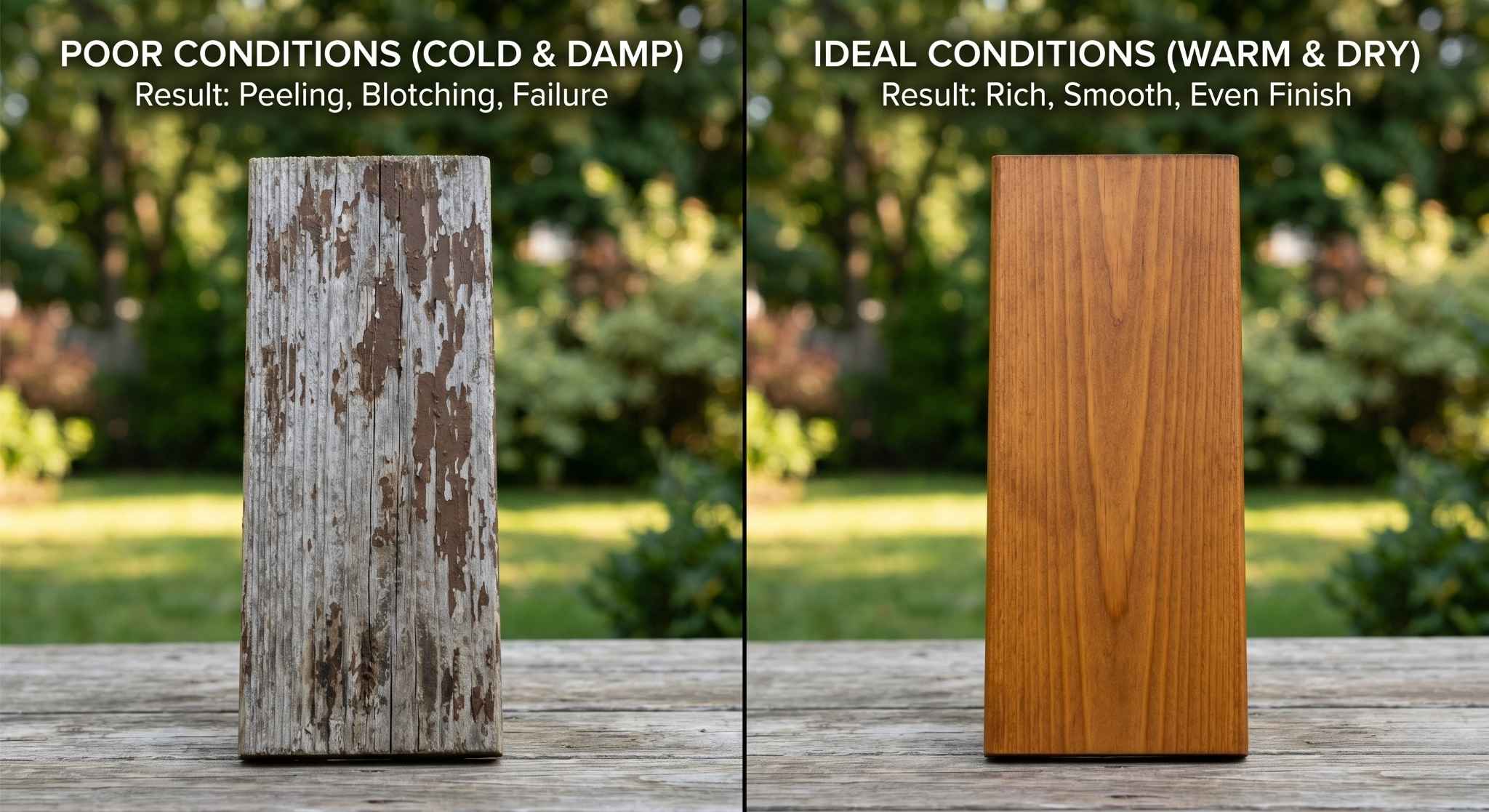
Temperature is the single most important weather variable when staining a deck. Most water-based and oil-based deck stains require air and surface temperatures between 10°C and 30°C (50°F and 86°F) for proper application and curing.
Here’s why this range matters:
Too cold (below 10°C / 50°F): Stain becomes thicker, harder to spread, and slow to dry. More critically, if temperatures drop near freezing overnight before the stain has cured, the film can crack, peel, or fail to bond at all. In Ontario’s spring and fall shoulder seasons, overnight lows can sneak up quickly and ruin a fresh application.
Too hot (above 30°C / 86°F): Stain dries too fast on the surface before it can properly penetrate the wood grain. This creates a surface-only film that peels sooner rather than a deep, durable bond. It also makes lap marks and brush strokes more visible.
The sweet spot: Aim for mild, stable temperatures between 15°C and 25°C (59°F and 77°F). This range gives the stain enough time to penetrate and cure without rushing or freezing.
| Temperature Range | Effect on Deck Stain |
| Below 5°C (41°F) | Do not stain – risk of freezing before curing |
| 5°C–10°C (41°F–50°F) | High risk – stain won’t bond or cure properly |
| 10°C–15°C (50°F–59°F) | Marginal – proceed only if temps are rising |
| 15°C–25°C (59°F–77°F) | Ideal range – best results |
| 25°C–30°C (77°F–86°F) | Acceptable – avoid direct sun, work early or late |
| Above 30°C (86°F) | Avoid – stain dries too fast, poor penetration |
Always check the surface temperature of the wood, not just the air temperature. A deck in full afternoon sun can be 10°C–15°C warmer than the surrounding air.
How Humidity Affects Deck Staining
Humidity is the other major factor that trips up even experienced DIYers. Relative humidity above 85% significantly slows the drying process and can trap moisture in the wood, preventing the stain from adhering correctly.
Here’s what high humidity does to your project:
- It raises the wood’s moisture content, leaving less room for stain to penetrate.
- It extends dry time dramatically, leaving the surface vulnerable to contamination.
- In humid conditions, water-based stains in particular can take twice as long to dry and may dry unevenly.
The recommended humidity range for deck staining is below 70–80%. Most stain manufacturers print this recommendation on their product label, though it’s easy to miss.
In the York Region and Georgina area, humid summer days are common – especially in late July and August. A day that looks sunny and warm can still carry enough humidity to ruin a stain job if you don’t check the numbers.
Use a simple hygrometer or check a reliable weather app for relative humidity before you start. Apps that show hourly humidity forecasts are especially useful for planning your start time.
Rain: Before, During, and After Staining
Rain affects deck staining at every stage of the project. Here’s how to think about it:
Rain Before You Stain
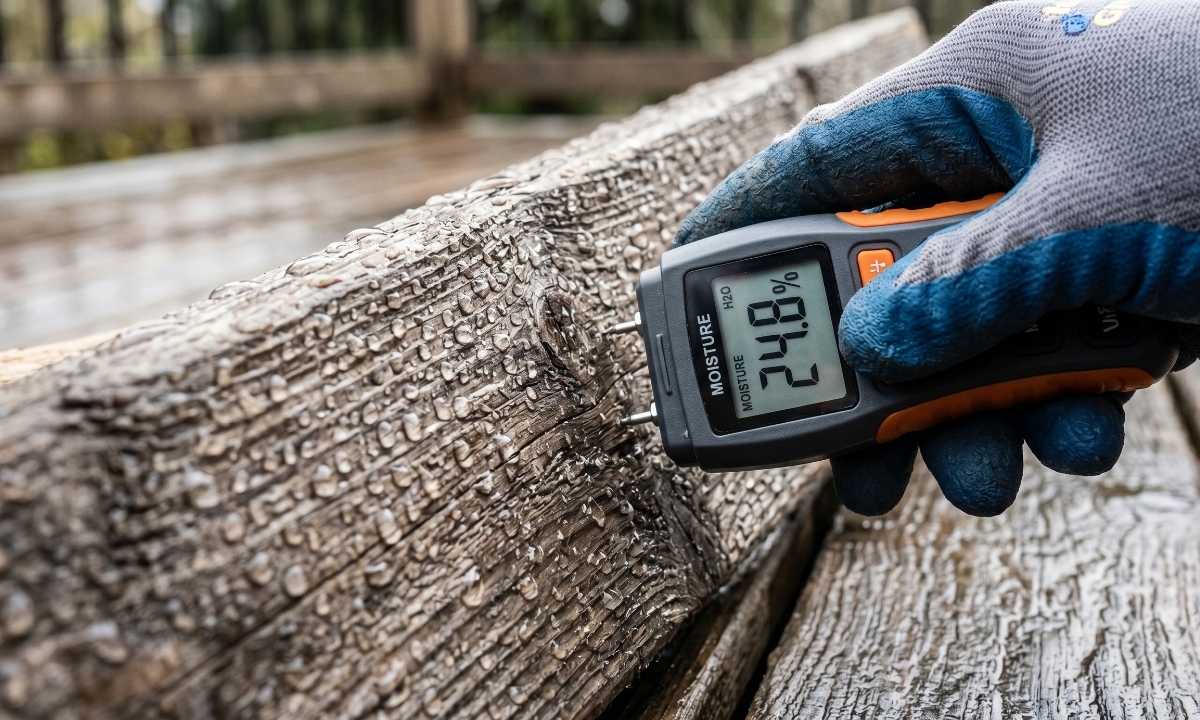
Wood needs to be completely dry before you apply any stain. After rainfall, wait a minimum of 24 to 48 hours before testing the wood for moisture – and in some cases longer, depending on how much it rained and how sunny the drying conditions are.
The easiest moisture test: sprinkle a few drops of water on the deck boards. If the water beads up and sits on the surface, the wood is still too wet. If it absorbs quickly into the grain, you’re likely ready to proceed.
A moisture meter is a more precise option, and worth the investment for larger projects. Most stains require wood moisture content below 15–18% before application.
Rain During Application
Never stain a deck if rain is in the forecast within the next 24 to 48 hours. Rain hitting freshly applied stain – even several hours in – can wash it off, dilute the pigment, or cause streaking and spotting that’s difficult to correct.
Check a multi-day forecast, not just the day’s outlook. A clear morning can turn into an afternoon thunderstorm in Ontario, especially in summer.
Rain After Application
Once the stain has fully dried, rain is no longer a concern. But “dried” and “cured” are not the same thing. Most deck stains are dry to the touch within 4–8 hours but take 24–72 hours to fully cure, depending on the product, temperature, and humidity. Avoid foot traffic and definitely avoid rain during that full curing window.
Wind: The Hidden Variable in Deck Staining Weather
Wind often gets ignored when homeowners plan a deck staining project, but it plays a real role.
Moderate wind (under 20 km/h) is actually helpful – it promotes airflow and helps the stain dry more evenly. A light breeze on a warm day is close to ideal.
High winds (over 30–40 km/h) cause problems:
- Airborne debris – pollen, dust, leaves, insects – lands in the wet stain and ruins the finish.
- Wind accelerates drying unevenly across the deck surface, causing lap marks.
- It can blow stain onto windows, siding, furniture, or neighbouring plants.
If you’re expecting gusty conditions, it’s better to wait. A clear, calm morning is almost always the best time to start a deck staining project.
How Weather Affects Deck Staining Across Ontario’s Seasons
Living in Ontario means dealing with dramatic seasonal swings. Here’s how each season stacks up for deck staining:
Spring (April–May)
Spring offers good staining windows but requires careful planning. Temperatures are rising but can still dip below freezing overnight, especially in April. Wait until consistent overnight lows stay above 10°C before committing. May is typically the earliest reliable month in the York Region.
Summer (June–August)
Summer is the most popular season for deck staining – but not always the best. Peak summer heat and humidity can work against you. Aim for early morning applications before the sun peaks, and avoid staining during heat waves or humid spells. Late June and early September often offer the most balanced conditions.
Fall (September–October)
Early fall is arguably the best time to stain a deck in Ontario. Temperatures are moderate, humidity tends to drop, and you get more overcast days that protect the wet stain from drying too fast in direct sun. Late September and early October are ideal. By November, it’s too risky – frost can arrive unexpectedly.
Winter (November–March)
Deck staining in winter is not recommended. Freezing temperatures prevent proper curing and can permanently damage the stain film. If your deck needs work urgently, focus on cleaning and prep during mild stretches and save the stain application for spring.
Direct Sun vs. Shade: Does It Matter?
Yes – significantly. Applying deck stain in direct, intense sunlight causes rapid evaporation from the wood’s surface, which means the stain dries before it can fully soak into the grain.
Best practice: Work in the shade or during the cooler, shadier parts of the day – early morning or late afternoon. If your deck faces south or west and receives full afternoon sun, plan to apply stain in the morning before the sun reaches it.
Overcast days with mild temperatures are often the most overlooked ideal conditions for deck staining. No direct sun, moderate humidity, and stable temperatures make for a slow, even cure.
Practical Signs the Weather Is Right to Stain Your Deck
Use this checklist before you open that first can:
- ✅ Air and surface temperatures are between 15°C and 25°C
- ✅ No rain in the forecast for the next 48 hours
- ✅ Relative humidity is below 70–80%
- ✅ The deck has been dry for at least 24–48 hours after the last rain
- ✅ Wind is calm to light (under 20 km/h)
- ✅ You’re starting in the morning or on an overcast day, not in direct afternoon sun
- ✅ Wood moisture content tests below 15–18%
If even two or three of these conditions aren’t met, strongly consider waiting. A single day’s patience can add years to the life of your deck finish.
When Weather Affects Deck Staining Results: Signs of a Weather-Damaged Finish
Even with the best intentions, weather can sneak up on you. Watch for these warning signs that conditions affected your application:
- Peeling or flaking within the first season – usually caused by moisture in the wood at time of application or rain hitting the stain too soon after application.
- Lap marks and uneven colour – often caused by applying in direct sun or high heat, where each stroke dried before you could blend it.
- Sticky or tacky surface that won’t harden – a sign the stain was applied in temperatures too cold for proper curing.
- White or milky patches – moisture got trapped under the stain film, commonly seen after staining in high humidity.
If you’re seeing any of these, the deck likely needs to be stripped back and re-stained under better conditions.
FAQ: How Weather Affects Deck Staining
Q: Can I stain my deck if it rained yesterday? It depends on how much it rained and how drying conditions have been since. As a general rule, wait at least 24–48 hours after rain before attempting to stain. Do the water droplet test – sprinkle a few drops on the wood surface. If they bead up, wait longer. If they absorb quickly and evenly, the wood is dry enough to proceed. In cool or overcast conditions, you may need to wait longer.
Q: What is the best temperature to stain a deck in Ontario? For most deck stains available in Ontario, the ideal temperature range is between 15°C and 25°C, with overnight lows staying comfortably above 10°C. This is most reliably achieved in late spring (late May–June) and early fall (September–early October). Always check both air temperature and the actual surface temperature of the deck boards, which can be significantly warmer than the surrounding air on sunny days.
Q: Can I stain my deck in the fall? Yes – in fact, early fall is one of the best times to stain a deck in Ontario. September and early October typically offer moderate temperatures, lower humidity, and fewer extreme weather events than summer. Just make sure you complete the project and allow full curing time before the first frost arrives. Avoid staining after mid-October as freezing overnight temperatures become an increasing risk.
Q: What happens if it rains on freshly stained wood? If rain falls on a deck stain within the first 12–24 hours, the results can range from minor spotting to complete wash-off of the stain, depending on how much rain falls and how far along the drying process was. Light drizzle on a stain that’s already dry to the touch (4–6 hours in good conditions) may cause minimal damage. Heavy rain on fresh stain almost always requires stripping and re-application. Always check a 48-hour forecast before starting.
Q: Does it matter if I stain my deck in direct sun? Yes – direct, intense sunlight is one of the most common reasons deck stain jobs fail prematurely. High surface temperatures from direct sun cause the stain to flash-dry on the surface before it can penetrate the wood grain, resulting in poor adhesion and a finish that peels quickly. Plan to apply stain in the early morning, late afternoon, or on an overcast day whenever possible. If your deck is in full sun, consider tracking when the shade hits different sections and working accordingly.
Conclusion
Weather is not just background information when it comes to deck staining – it is one of the most decisive factors in whether your project succeeds or fails. Getting the temperature, humidity, and rain window right protects your investment and ensures the stain bonds deeply for long-lasting durability.
To summarize the key takeaways:
- Ideal temperature: 15°C–25°C, with overnight lows above 10°C
- Humidity: Below 70–80% relative humidity
- Rain: No rain within 48 hours before or after application
- Best timing: Early morning or overcast days, never in direct afternoon sun
- Best seasons in Ontario: Late May–early June and September–early October
If you’re unsure whether conditions are right – or if you simply want the job done correctly the first time – the team at Caleb’s Creations is here to help. We know the York Region weather patterns inside and out, and we schedule every deck staining project around the conditions it deserves.Contact us today for a free estimate and let’s get your deck looking its best.